A developer tool is part of someone else’s workflow. Its quality shows up in whether a person can understand the contract, make the first useful request, handle an error, and keep the integration working as the surrounding system changes.
That means a useful API is more than a set of endpoints. It is a promise about what inputs mean, what a successful response contains, how failure is represented, and which behaviors a client can safely depend on.
Start with the caller’s task
Identify the developer who will use the interface and what they need to accomplish. Are they provisioning a resource, reading a status, submitting a job, or connecting an existing workflow? Map the shortest path from credentials to a successful result, then include the permissions and cleanup required to do it safely.
Design around stable concepts that callers can name. Avoid making a client infer state from incidental text or undocumented timing. If the operation takes time, give it a visible lifecycle and a way to inspect progress rather than leaving the caller to guess whether a request disappeared.
Make the contract explicit
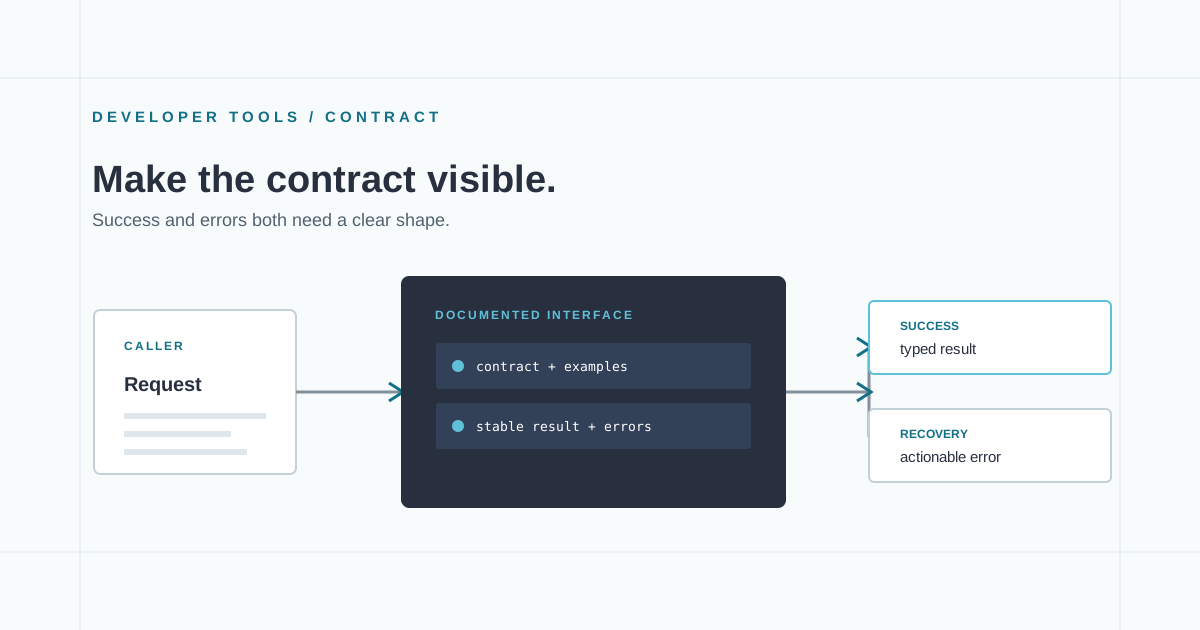
Document request fields, response shapes, authentication, limits, and error behavior. A machine-readable contract such as the OpenAPI Specification can help teams describe an HTTP API consistently and generate tools around that description. It still needs examples and an explanation of the decisions that matter to a caller.
Errors should help a developer decide what to do next. Distinguish invalid input, missing permissions, unavailable dependencies, and conflicts. Return a stable code and a safe explanation; keep private implementation details in server logs. Where a request can be repeated, define whether the operation is safe to retry and how the client can check its state.
Treat compatibility as part of the product
Clients may ship on a different schedule from the API. Decide which changes are additive, which change behavior, and how a client learns about a deprecation. Versioning can help, but it does not remove the need to communicate compatibility boundaries and provide an upgrade path.
Use contract tests or representative client examples to catch mismatches before release. Test the errors as carefully as the success response; many integrations are straightforward until the first expired token, duplicate request, or unexpected value appears.
Optimize the first successful use
Good docs let a developer make progress without reconstructing the system from source code. Include:
- A minimal example that can be run from a clean environment.
- Required credentials and the permissions they need.
- One complete workflow, including how to inspect the result.
- Common errors and their recovery steps.
- A clear way to get support or report a defect.
Examples should stay close to the real contract. If they rely on hidden setup or fictional fields, they create friction just when the integration should be proving itself.
Make operation visible
The same interface needs to support the team that owns it. Decide what can be logged safely, how to trace a request across dependencies, which limits apply, and how operators can detect a stuck task. Give users a stable request identifier when it helps them ask for support.
A strong developer tool helps the caller and maintainer see the same system clearly. If a repeated technical workflow needs a more dependable interface, we can help shape the API, integration, or developer tool around it.