A roadmap can look detailed and still leave a product team unsure what to build next. That usually happens when the plan lists capabilities without naming the person they help or the outcome those capabilities should make possible.
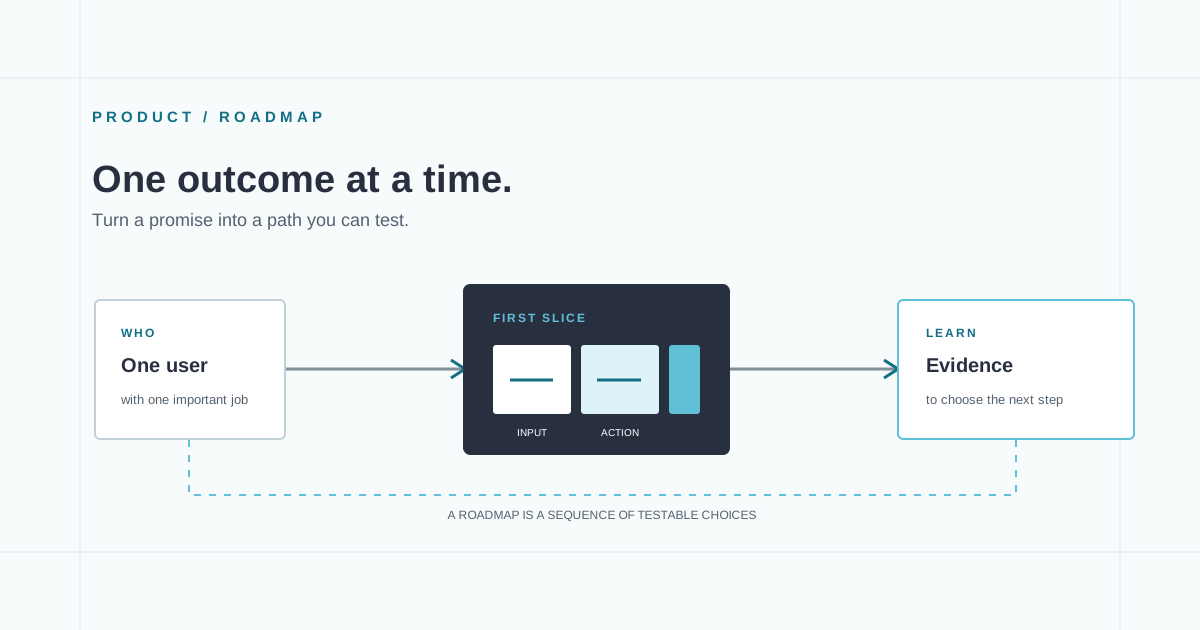
Before adding another feature, choose one user and one job. State the job in the user’s words, describe what blocks it today, and agree what a better result would look like. The result does not have to be a growth metric; it can be a task completed with fewer handoffs, a decision made with better information, or a first successful use of the product.
Turn the outcome into a testable slice
Suppose a team wants a scheduling product. “Add dashboards, notifications, and team management” is a collection of features. “A coordinator can publish a schedule and each person can confirm the next shift” describes an outcome and a path through the product.
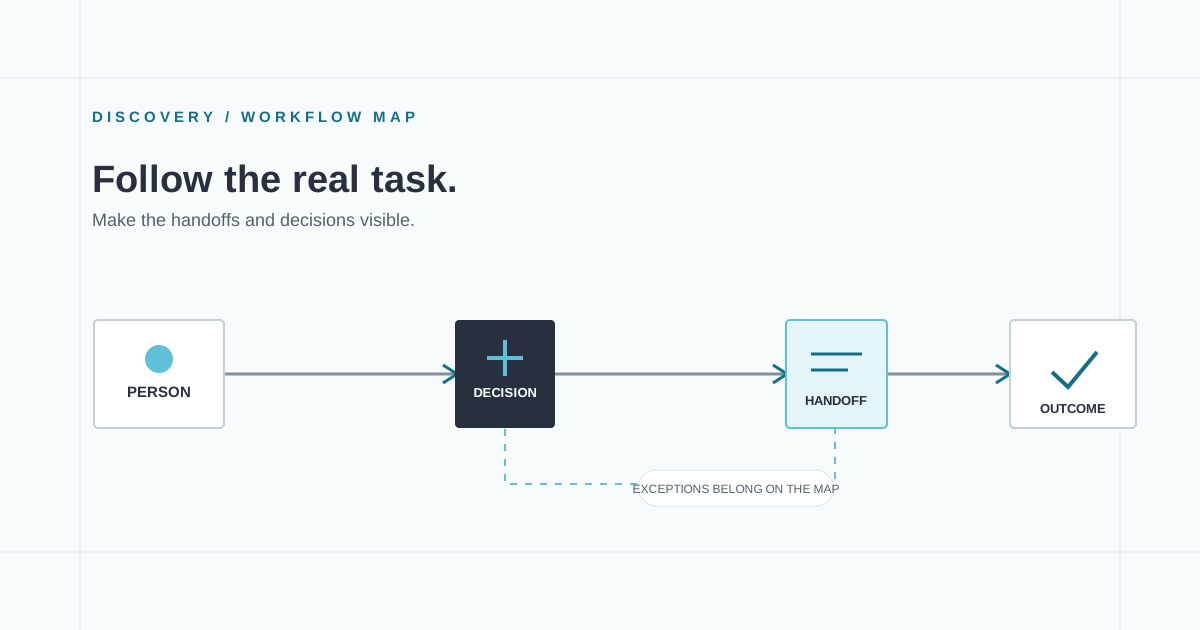
Use that path to draw a narrow vertical slice: the user arrives, supplies or finds the necessary information, completes the central action, and sees a clear result. Include the permissions and error states needed for that slice to work in real conditions. A polished screen that stops before the workflow is complete does not test the product promise.
Write down which assumptions the slice will test. For example: do the right people have access to the source data? Does the person completing the task understand the choices? Can the team support the workflow when something is missing? Each question can shape the sequence of work.
Separate a roadmap from an inventory
An inventory records possible work. A roadmap explains the order in which the team will reduce uncertainty and deliver value. Group work around user outcomes or meaningful risks, then keep implementation choices flexible until evidence supports them.
For each proposed item, record:
- The user and task it supports.
- The evidence that this task matters.
- The smallest end-to-end improvement worth testing.
- The operational or technical constraint that could change the plan.
- The signal that would support continuing, changing, or stopping.
This makes tradeoffs easier to discuss. A feature with a compelling name may not deserve priority if it does not improve a current user path. A small reliability task may matter more if it removes a blocker from the product’s central promise.
Decide what to learn before you scale the scope
Before a release, agree how the team will learn from it. That might mean walking through the workflow with a few intended users, reviewing support requests, checking whether key actions complete, or examining where users abandon the task. Choose evidence that fits the question rather than collecting activity without a decision attached to it.
Separate leading signals from guarantees. Early feedback helps a team decide what to investigate; it cannot promise retention, revenue, or product-market fit. If the evidence is mixed, narrow the question and learn again instead of explaining away the result.
Keep the first release honest
A first release should make the primary task possible, not pretend the product is finished. Name what is included, what remains manual, and who handles exceptions. Make reliability, privacy, accessibility, and support part of the release decision rather than future polish.
A useful roadmap is a series of explicit choices: what outcome matters now, what evidence could change the plan, and what the team will not build yet. If your product has a clear audience but its first useful workflow is still fuzzy, we can help shape the product scope and build the initial SaaS application.